
The Rising Lion

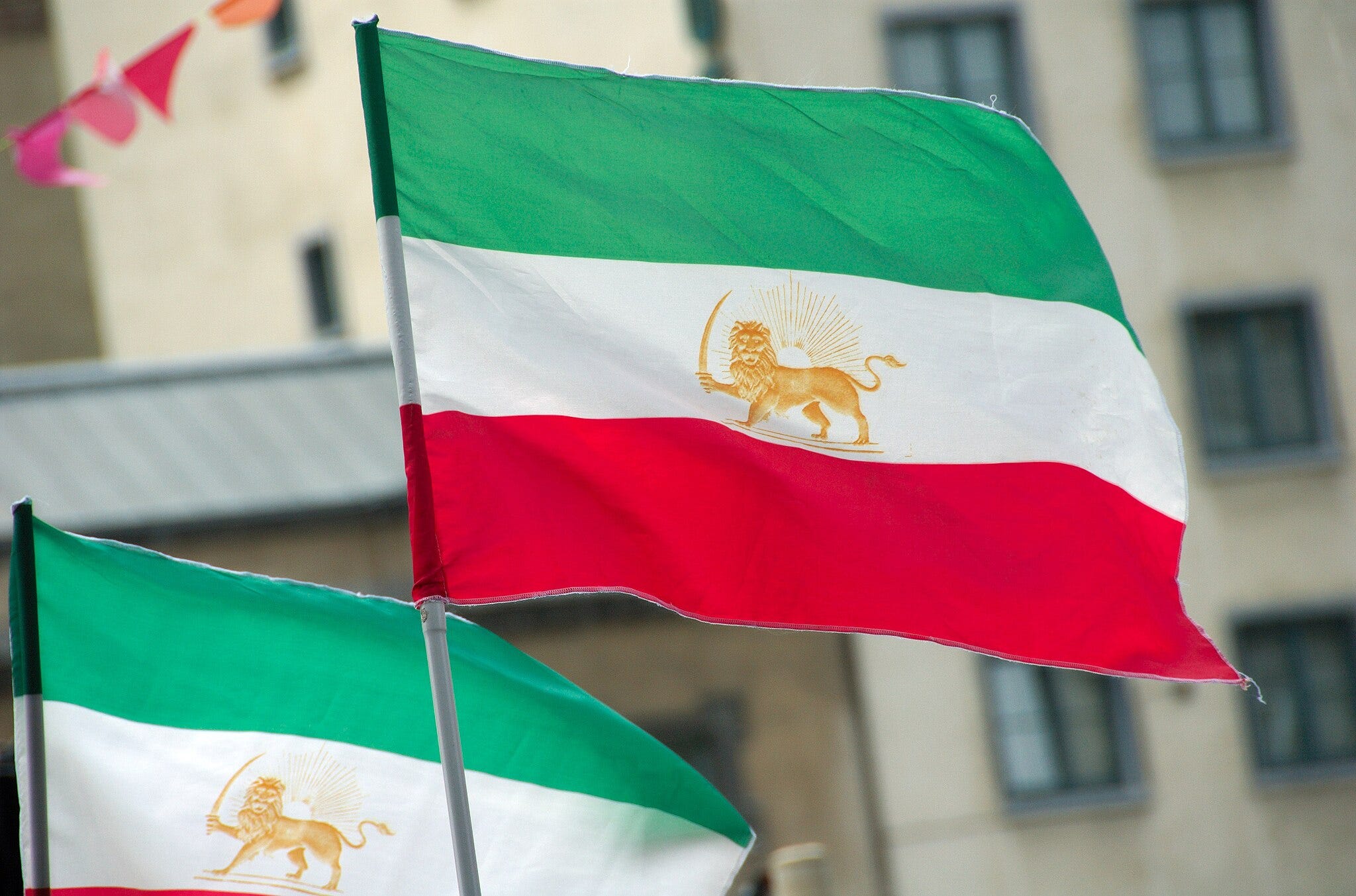
Forty seven years ago, a world-changing event occurred which did not resonate with most Americans, preoccupied as they were with Broadway theater ticket prices increasing to $26.00, keeping up to date on the “Saturday Night Fever” fashion trend, and whether ‘No Frills’ cornflakes were equal in quality to name-brand varieties. And anyway, Iran was far away, and the overthrow of a Middle Eastern monarchy was a good thing, right?
The Iranian Revolution is now regarded by most historians and strategic analysts as the second most important political development of the 20th century. It is surpassed only by the Russian Revolution of 1917 for its’ impact on internal national conditions and the resulting international strife.
The government that it upended was the monarchy of Mohammed Reza Pahlavi, Emperor of Iran, King of Kings, Light of the Aryans, a man who as Crown Prince, was considered in his youth to be a playboy with little depth and certainly not to be consulted in any matters of state. However, he studied; not only forms of government, diplomacy, checks and balances within a government but also modern strategic planning and the motivations and relations between states. He was very proud of the progress that his father, the Emperor, had made in Persia since he had seized the throne in 1925; building schools, roads, hospitals, and the first university. But he wanted to do more, to make Iran a truly modern country and that would take money. Luckily the money came in the form of one essential commodity – oil.
The new Shah came to power in 1941 and slowly, because of the Second World War, started planning his project which he called “The White Revolution” – and it was revolutionary. He completed the emancipation of women which his father started. Women could vote, the veil was outlawed and girls could go to school and college. Professions were open to all.
New industries were encouraged because the Shah knew that someday the wells would run dry and his country would need other economic options.
One of the biggest reforms was land ownership. Iran is three times the size of France and possessed huge estates, some held by private families, some by the clergy. This is where the trouble began. The Emperor was determined to break-up these estates, and by so doing, to transfer 20 acre plots to the peasants who worked them. In order to accomplish this the Imperial government bought the land at the market price. Those who did not wish to sell were informed that the land would be confiscated. It must be remembered that deference to the Emperor was ingrained in Persian culture. “The Shah is the Shadow of God” is an old Iranian proverb. When the day arrived to present the deeds the Shah would perform the ceremony personally. This was deemed necessary for two reasons; to remind the peasants who it was who made this miracle and to confirm to the former landowners that this transaction had the force of law – “So it is written, so it is done”. But the clergy protested; the land was their source of wealth and therefore, independence. To his credit the Shah did not have them killed as Henry VIII had done when he seized the monasteries. In response, they were told to read the Koran and if they had already done so, to read it again. And to stay out of political affairs.
This was the genesis of a long and ugly fight for societal primacy.
And so the stage was set. The mullahs began a campaign against the government claiming it was evil, corrupt, in league with infidels and wicked foreigners and an enemy of the Prophet.
Meanwhile, Tehran, the capital, was transformed into a cosmopolitan city, with restaurants, sidewalk cafes, ladies fashions flown in from Paris, foreign banks that offered new investment opportunities, and real estate agents showcasing apartments in London and Corsica.
And the ministers of the Shah sent their children to school at Harrow, Eton and Le Rosey. Generals ordered military equipment that their soldiers didn’t know how to use. Naval commanders said they needed frigates that they could not man with experienced sailors. With so much money being generated so quickly through American, British and Dutch oil contracts corruption began to flow into Iranian society, even into the royal family. People who sought to expose the facts were arrested and jailed for lengthy terms. And the mullahs and ayatollahs used all this to discredit the monarchy. All the good that had been done in the past was forgotten. The Shah was being demonized and he had no creditable answer because much of it was true. The Iranian people had listened to the clerics’ sermons by way of CD cassettes smuggled into the country from abroad notably from France. Those recorded speeches described the waste and graft at the highest levels of the government and the irreligious conduct of the royal court. There was also a general feeling that the country had changed much too quickly; that something had been lost. Human beings can cope with changing economics, with new technical advances, and with shifting social mores. But they cannot adjust to all three simultaneously.
The Shah was now a sick man, fighting cancer of the spleen. He was distracted by ill health and though ministers and friends offered advice it was to no avail. He was incapable of making decisions and relied on private advisors and cronies. Months of strikes followed in every sector of the economy. The military rank and file began to join the protesters and when the Air Force Academy cadets joined the disturbances he despaired. One General came to him and said, “We still have ‘The Immortals’”, (the elite regiments numbering a total of 40,000 men that only the sovereign had the power to command). “No”, he said, “I won’t do that”.
What followed was a farce that led to a tragedy. The Shah, after discussing the situation with President Jimmy Carter’s envoy, announced that he would take a vacation. It was the longest vacation anyone has ever taken. He died in exile and his eldest son Reza Pahlavi, is now the main contender to be the future head of state of Iran.
The Iranian Revolution only entered the consciousness of the American people after the Islamic Republic invaded the American Embassy in Tehran and held 50 hostages for 444 days, a disgraceful chapter in the annals of American diplomacy. The failure of the Carter Administration to support the Shah or to at least provide guidance in order to prevent the Mullahs from assuming power is the gift to the world that keeps giving to this day. The new government of the Mullahs sought to spread their revolution to other neighboring countries and by so doing destabilized the entire Middle East. In addition, they openly called for the destruction of the state of Israel and for the massacre of the Jewish people. The Islamic Revolution is, without a doubt, the single biggest foreign policy disaster in American history.
The following year the Iraq- Iran War started. Saddam Hussein, armed by the United States and sensing that Iran was weak, invaded on September 30, 1980. The war ended in a stalemate after 8 years with 1,000,000 people having lost their lives. Despite numerous rebellions, the Islamic Republic has survived to financially support the Palestinian Liberation Organization (PLO), Hamas, Hezbollah, the Houthis, and various “lone wolf” terrorists. It has been allied with North Korea, China, Russia, Venezuela, and Cuba. The people of Iran have been brutalized during this period with two generations attempting to overthrow this regime with no assistance forthcoming from the United States. This included several administrations both Republican and Democrat even though assurances were made that “help was on the way”.
During the “12 Day War” last June between Iran and Israel, Operation “Rising Lion” was Israel’s answer to the Mullah’s attack on their cities with missiles and artillery. The operation’s name was interesting. It was not a reference to Israel, lions are never used to describe Israel, King David is the usual symbol of Israeli identity. It was a signal to the Iranian people that this was their opportunity to rise up and restore their country ‘s true nature as depicted on their previous national flag. The Imperial Banner has now been taken up as the flag of the uprising and has suddenly appeared throughout the world, in London, Paris, Los Angeles, New York, virtually everywhere.
And now the American government has pledged that it will aid the people of Iran to reclaim their country.
After more than four decades of oppression, punctuated by famine, wars, young people imprisoned, families separated, travel limited, communication censored, women abused and ignored, education restricted, the people seem to have had enough. With the currency worthless making the purchase of food impossible, the inability to express dissent in a free and open form and with no sign that any change was in the offing, the riots began in late December. Iran is impoverished paying for wars throughout the Middle East at the expense of their citizens’ wellbeing and indeed their futures.
No matter how many police and soldiers are assigned by the government to ‘deal’ with the protesters, the crowds will not disperse. In fact, they grew. And for the first time in the history of the Islamic Republic, the demonstrations spread – from cities to towns to villages – overnight. Tens of thousands shouting “We don’t want a Republic. We want freedom and the King!” The clerics could not believe that their own policies and incompetence had led to this, so they blamed the Israeli secret service, the Mossad or the CIA or the Communists, anyone but themselves.
No amount of warnings or threats will stop the rioting. This is the time to rid the world of this disaster in history. No people deserve to live like this. No one voted for this.
The number of people killed in the demonstrations is said to exceed 1,000 and those arrested to be more than 10,000. President Trump has promised that the United States will come to the aid of the citizens of Iran; that the mistakes of past administrations will not be repeated. What that aid will be has not been made clear. But whatever the American response, the decision will have to be made soon.
The public execution of the prisoners is scheduled to begin Thursday.